
IAGA |
|
|
|
Shen Kuo Award for Interdisciplinary AchievementsIn recognition of Prof Forbes scientific achievements, including studies of the upper atmosphere environments of Earth, Mars, and other planets; coupling of these environments to lower altitudes and to solar variability; geomagnetic storm effects on satellite drag variability; the vertical propagation of tides and planetary waves in planetary atmospheres, and their electrodynamic and chemical effects. |
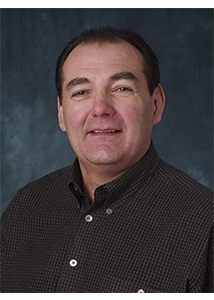 |
Prof Jeffrey Forbes Professor Jeffrey Forbes has been scientifically active for over 45 years and during that period, he has published more than 270 papers in refereed journals. His path-breaking 1976 paper on the electrodynamic effects of atmospheric solar tides and their relationship to the Global Square current system and his 1981 review paper on the Equatorial Electrojet, continue to provide the basis for understanding tidal-ionospheric coupling. Hence Jeffrey Forbes’ research is not only important from the point of view of Aeronomic phenomena, but also for understanding the contribution of ionospheric currents to daily variations of the geomagnetic field recorded at a large number of observatories around the globe as well as measured in space by satellites such as CHAMP and Swarm. Since 1973, Jeffrey Forbes has played a leading role in quantifying thermospheric neutral density and wind response to severe geomagnetic storms using satellite observations, and modelling them. He has also undertaken pioneering work on identifying upper atmosphere tidal variability due to latent heat release in the tropical troposphere (1999, 2008) which plays an important role in the tidal variability in the ionospheric dynamo region (2008). For his outstanding achievements, Jeffrey Forbes has been honoured by the American Geophysical Union and the European Geophysical Union. He became a Fellow of AGU in 2008 and was awarded the Julius-Bartels Medal by EGU in 2016. |
|
|
Long Service MedalIn recognition of Prof Rasson’s efforts to continuously dedicate to produce the highest quality geomagnetic field data in many observatories around the world and repeat stations, and his devoted work to make Dourbes observatory a centre for absolute instrument and variometer development, comparison and testing. |
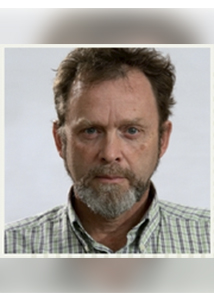 |
Dr Jean Rasson Dr Rasson has worked at the Observatory Dourbes for 40 years and he is the head of its geomagnetism unit with direct responsibility for two geomagnetic observatories in Belgium. Under his tenure, Dourbes became a centre for absolute instrument and variometer development, comparison and testing. The AUTODIF and the INTERMAGNET 1-Second variometer are examples for that. Additionally, he was interested in the traceability of measurement standards for the Earth's magnetic field and in the application of geomagnetic measurements for society, e.g. in aeronautics. |
IAGA Young Scientist AwardEmma Douma More information about the Young Scientist Award Recipients will be published as soon as possible |
|
IAMAS |
|
|
|
IAMAS Early Career Scientist MedalThis medal is awarded to an early career scientist working in any area of atmospheric science, who has carried out excellent scientific research and has shown to have a potential to make a significant international contribution in the future.. |
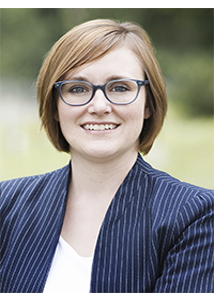 |
Prof Corinna Hoose Prof Corinna Hoose leads the Helmholtz-University Young Investigators Group "Aerosol effects on cloud ice, precipitation and climate" at IMK-AAF and is also Professor of Theoretical Meteorology at IMK-TRO. She has made significant contributions in the area of aerosol-cloud interactions with the focus on mixed-phase and ice clouds. Even at her early career stage, she is an internationally recognized expert in the area of heterogeneous ice nucleation and aerosol-ice cloud interactions, and is especially well-known for her review of laboratory experiments on heterogeneous ice nucleation. |
IAPSO |
|
|
|
Prince Albert I MedalThe Prince Albert I Medal is an award offered by the Foundation Rainier III of Monaco to a scientist who has made outstanding contributions to the enhancement and advancement of the physical and/or chemical sciences of the oceans. It is awarded every two years to a most prominent scientist chosen by a specially appointed IAPSO Award Committee. One year prior to each IAPSO Assembly, the Secretary General of IAPSO will call for nominations for the award. Nominations must be sent to the Secretary General within three months after the announcement. |
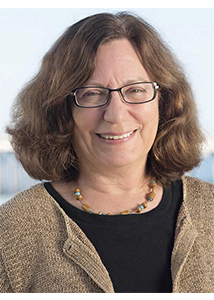 |
Lynne Talley Professor Talley is one of the world’s foremost ocean scientists of the past 50 years, with seminal contributions to our understanding of all ocean basins, including landmark discoveries in the Pacific, Atlantic and Southern Oceans. She has been a leader in ocean observations for more than 30 years and was a driving force of the World Ocean Circulation Experiment (WOCE). While Professor Talley’s core scientific interests have been in intermediate water formation, mode waters and circulation she has also made important contributions towards knowledge of ocean heat transport and fresh water fluxes. Recently her focus has been on the Southern Ocean and its connections with the Indian, Pacific and Atlantic oceans. This work has produced a number of landmark analyses, not only of basic hydrography but also chemical tracers and dynamics of the potential vorticity field and of the global overturning circulation. |
|
|
The Eugene LaFond MedalThe Eugene LaFond Medal shall be awarded to an ocean scientist from a developing country making a presentation (poster or oral) in a IAPSO-sponsored or co-sponsored symposium at the IUGG or IAPSO assemblies. |
|
Recent recipients of the medal have been:
The criteria for selection of the recipient are as follows:
Please tick the appropriate box on the registration form if you meet the above criteria and wish to be considered for this medal. |
|